Case study
Digital Marketing &
Performance Measurement
Building an end-to-end lead measurement system with GA4 and Google Tag Manager for a local plumbing business, then structuring a Google Ads Search campaign designed to feed into it.
01 · Overview
The challenge
The plumbing business relied on phone calls and contact-form submissions to generate leads, but lacked clear visibility into how visitors interacted with its website and which actions actually resulted in potential customers. It also had no paid traffic actively driving new leads, even though water heater repair, replacement, and installation searches stood out as a high-intent opportunity worth testing.
The goal
Build a measurement system that could show how users were generating leads and which marketing channels were driving those leads, then structure a Google Ads Search campaign around water heater services whose conversion tracking would plug directly into that same system.
02 · Measurement strategy
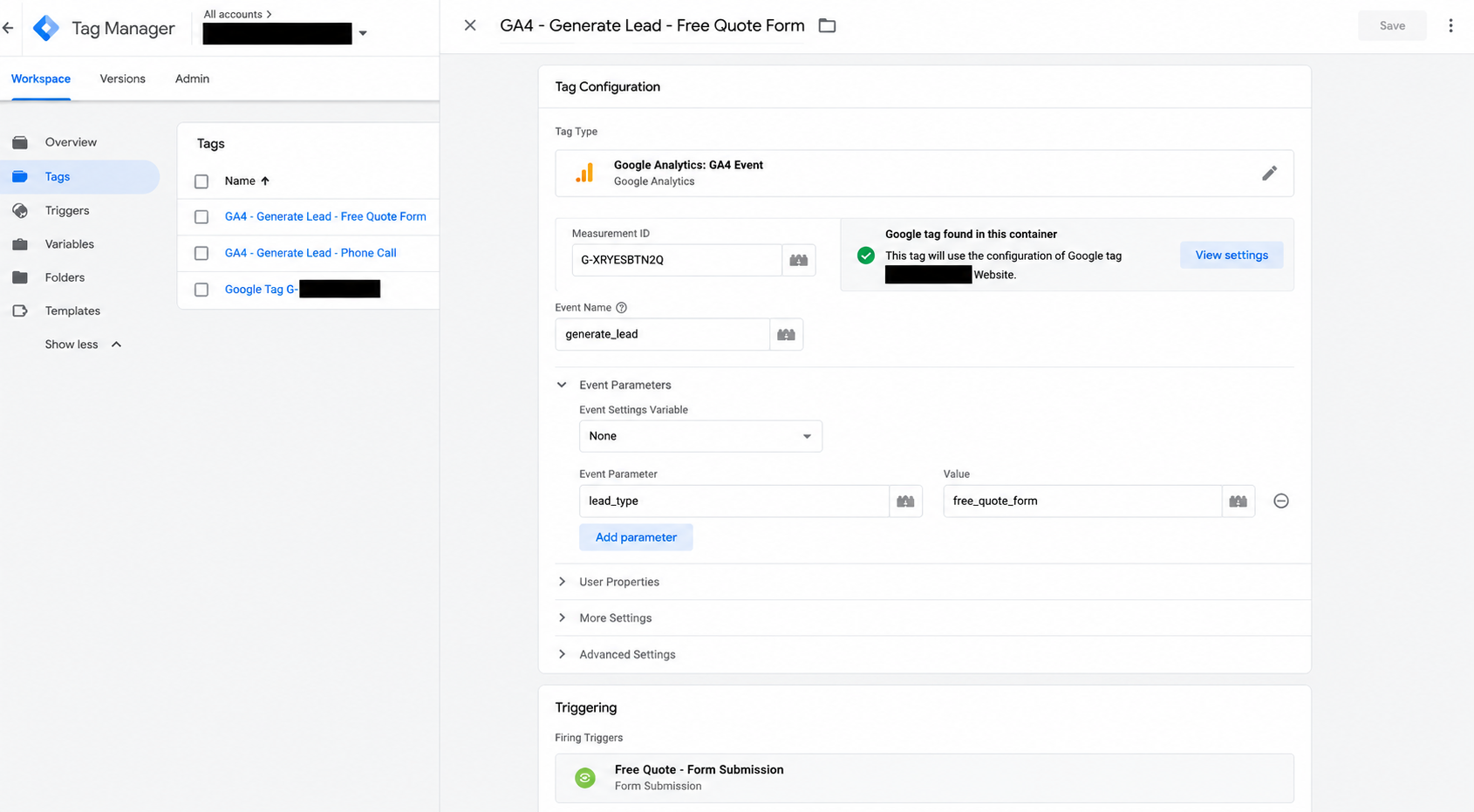
Both conversion actions were sent through GA4's generate_lead event, with a
lead_type parameter used to distinguish how each lead was generated. This avoided
needing a separate event for every lead method.
| Interaction | GA4 event | Parameter | Value |
|---|---|---|---|
| Free quote submitted | generate_lead | lead_type | free_quote_form |
| Phone number clicked | generate_lead | lead_type | phone_call |
03 · Implementation
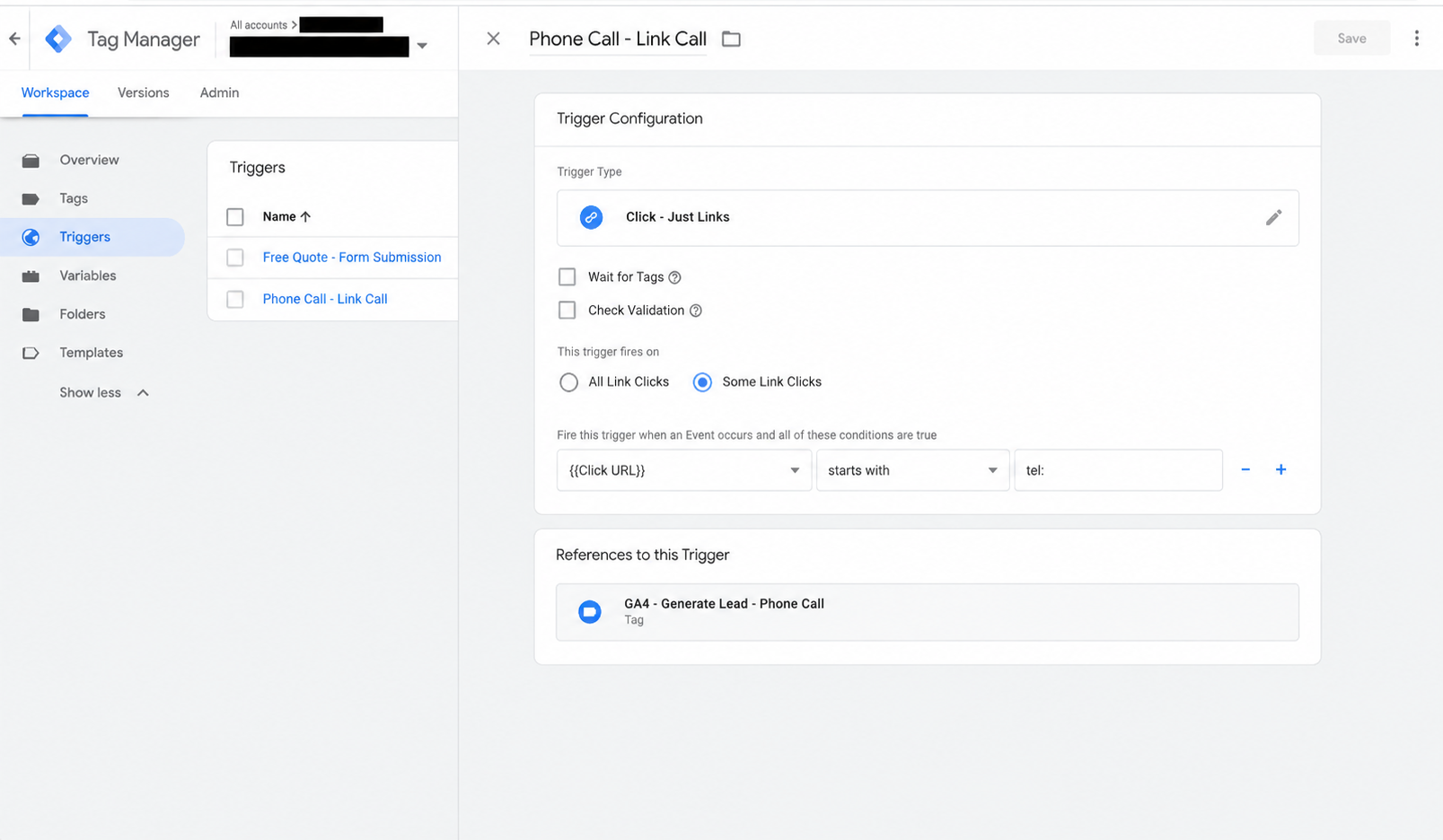
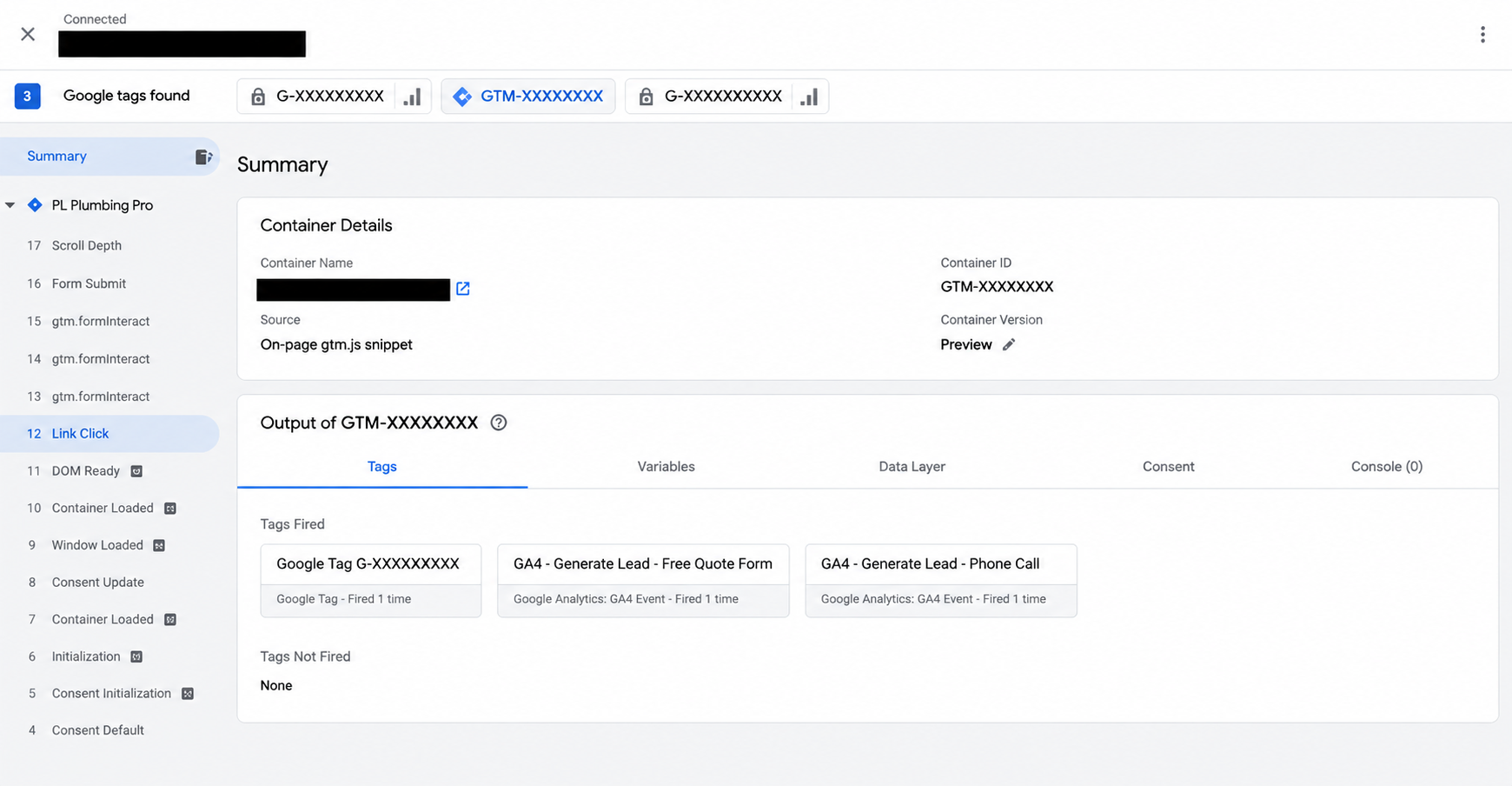
Configured separate GTM triggers for successful form submissions and phone-link clicks. The
phone trigger fires on any Click URL starting with tel:, a generic
match rather than one hardcoded number, so it works regardless of which phone number appears
on the page. Both triggers feed into a consistent GA4 lead measurement structure.
04 · Validation
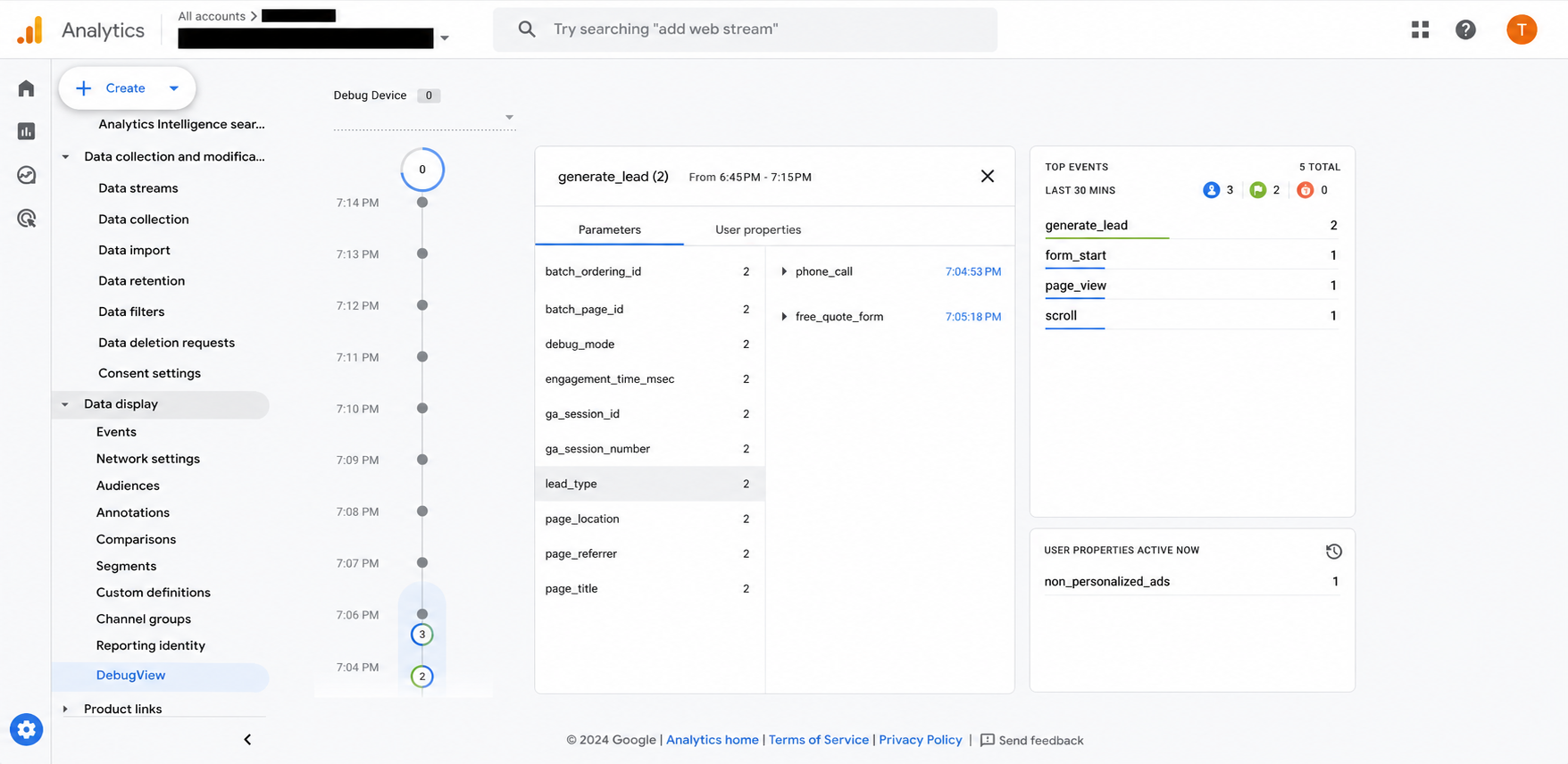
GA4 DebugView confirmed the lead_type parameter successfully traveled from the
website through GTM into GA4 for both lead methods. The parameter was then registered as an
event-scoped custom dimension, and generate_lead was marked as a key event,
connecting the technical setup to actual marketing reporting.
05 · Paid search campaign planning
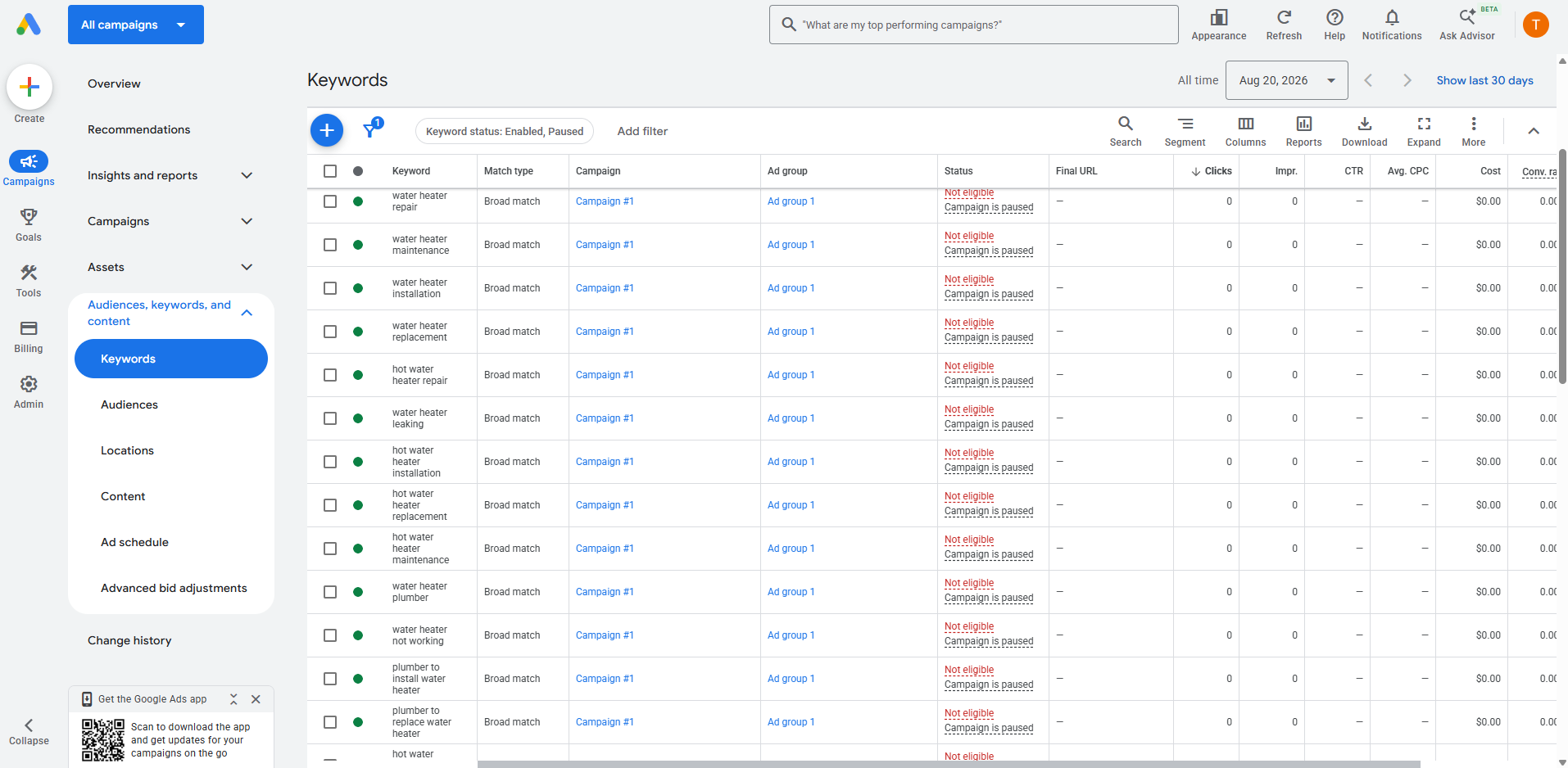
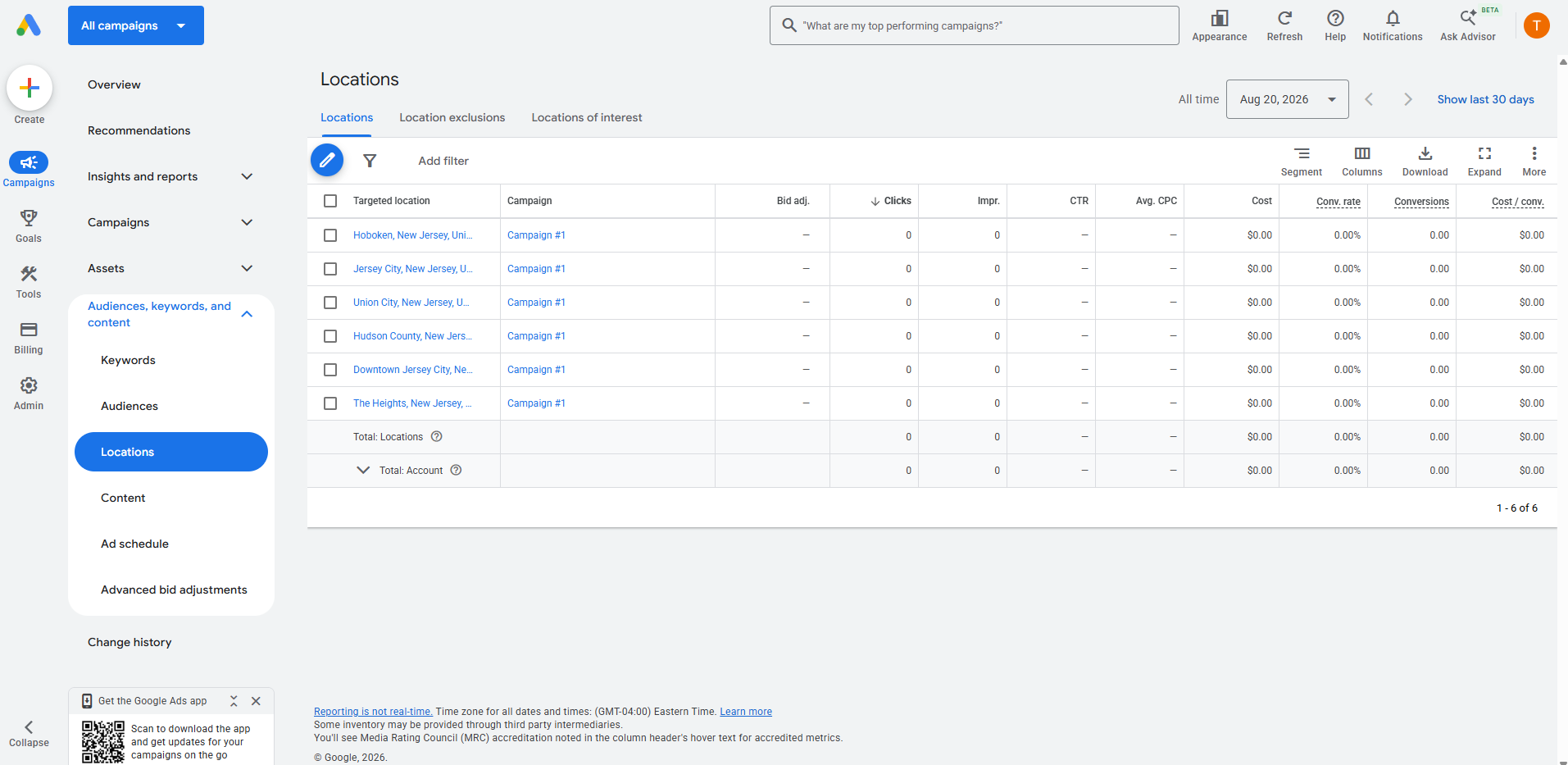
With lead measurement in place, the next piece was structuring a Google Ads Search campaign for the same business, targeting water heater repair, replacement, and installation searches within its service area on a controlled, realistic budget. A Search campaign was chosen over Performance Max so that keyword targeting, ad copy, and placement stayed under direct control.
Keywords were built around water heater and related plumber service-call terms to capture
clear purchase intent, geographic targeting was limited to the business's actual service area,
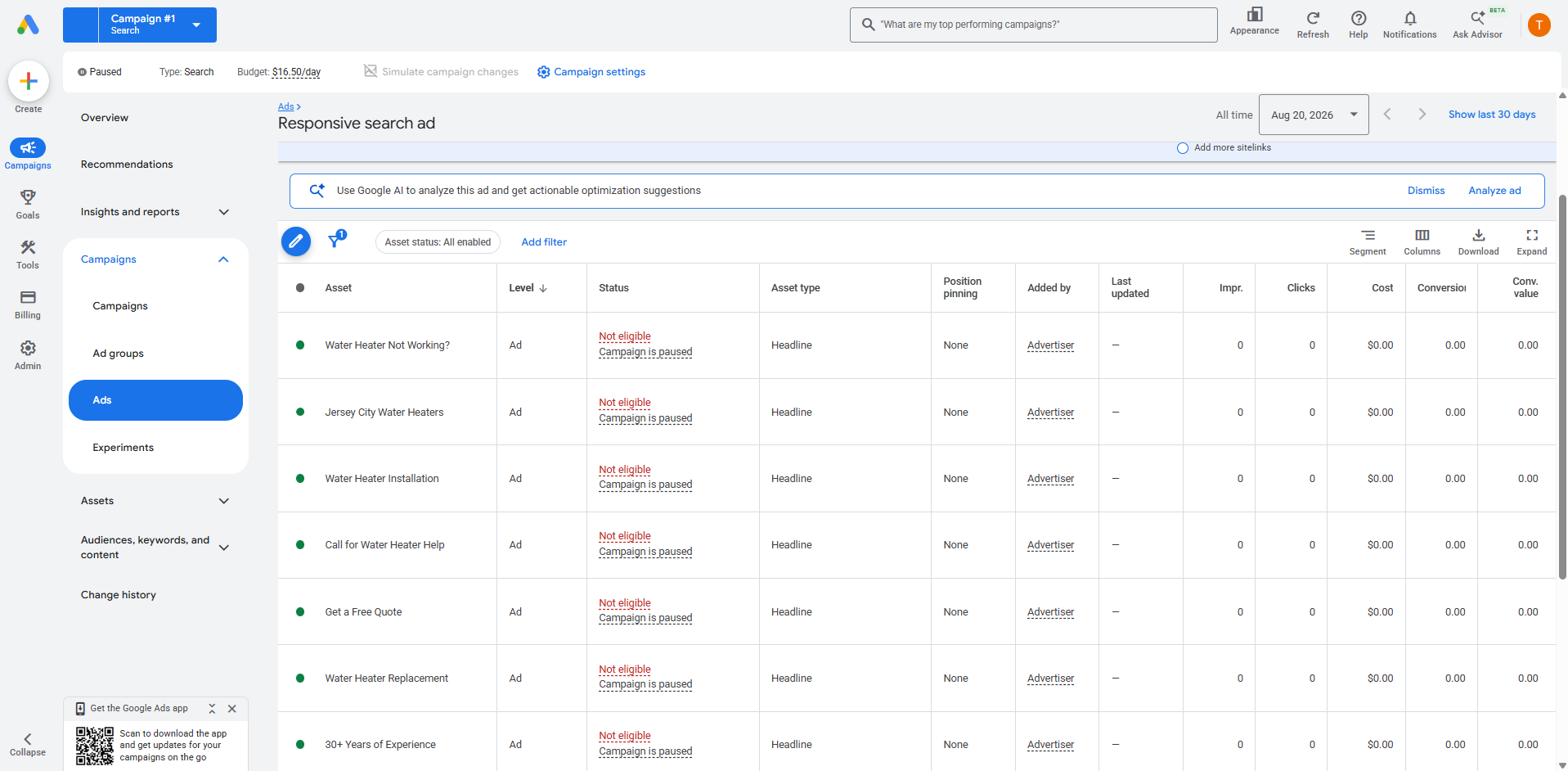
and a Responsive Search Ad was built with multiple headline and description variations covering
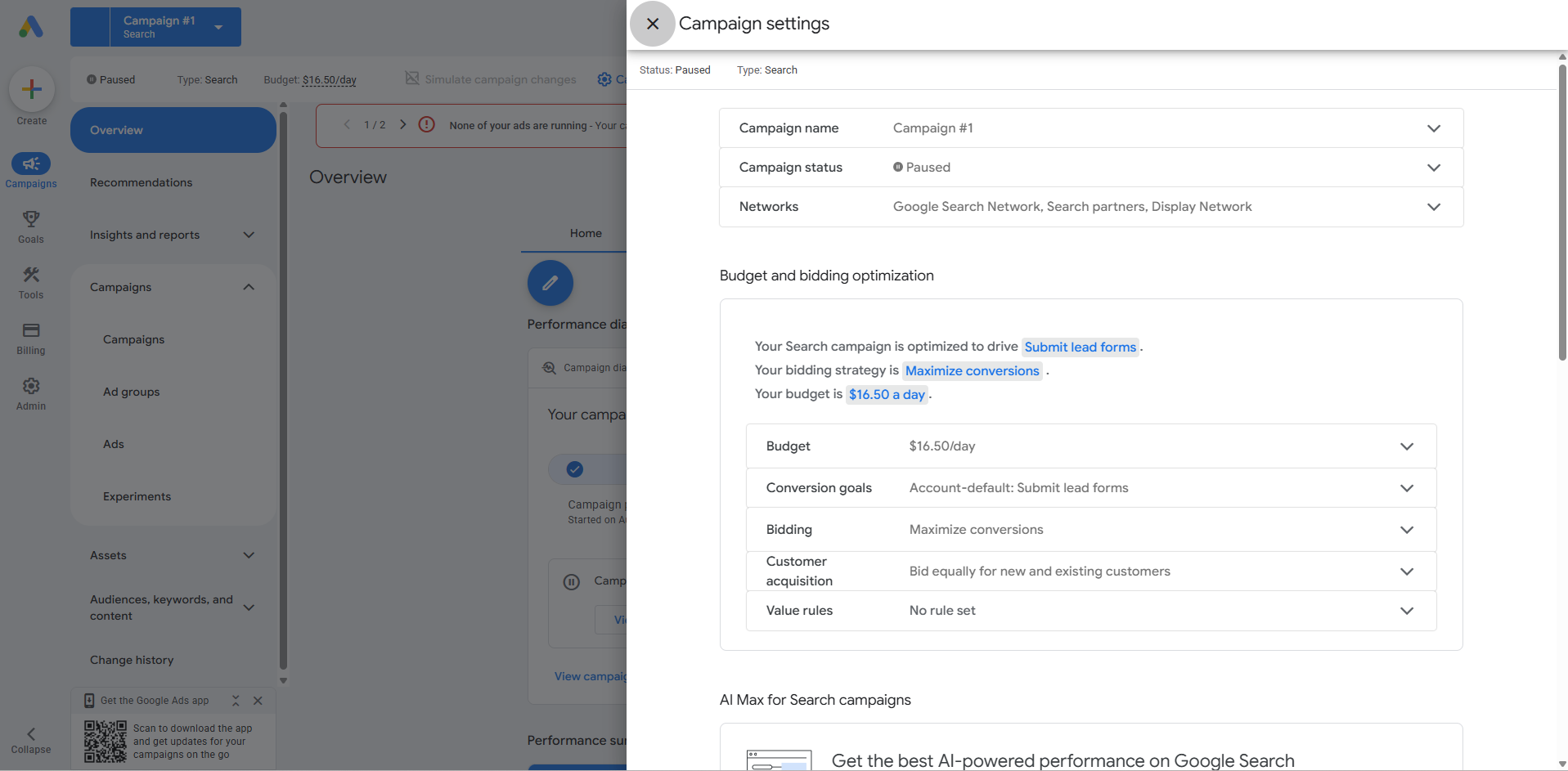
the core services. The daily budget was set at $16.50 (roughly $500 per month) with a Maximize
Conversions bidding strategy and lead-form submissions as the conversion goal, tying directly
back into the generate_lead event structure above.
06 · Outcome
Together, these two pieces form a single measurement-to-acquisition framework, a GA4 and GTM setup that captures the site's primary lead actions by type and source, and a Google Ads Search campaign structure whose keyword targeting, creative, budget, and conversion goal were all planned to report directly into that same framework.